Wednesday, 26 October 2011
Naomi to the rescue
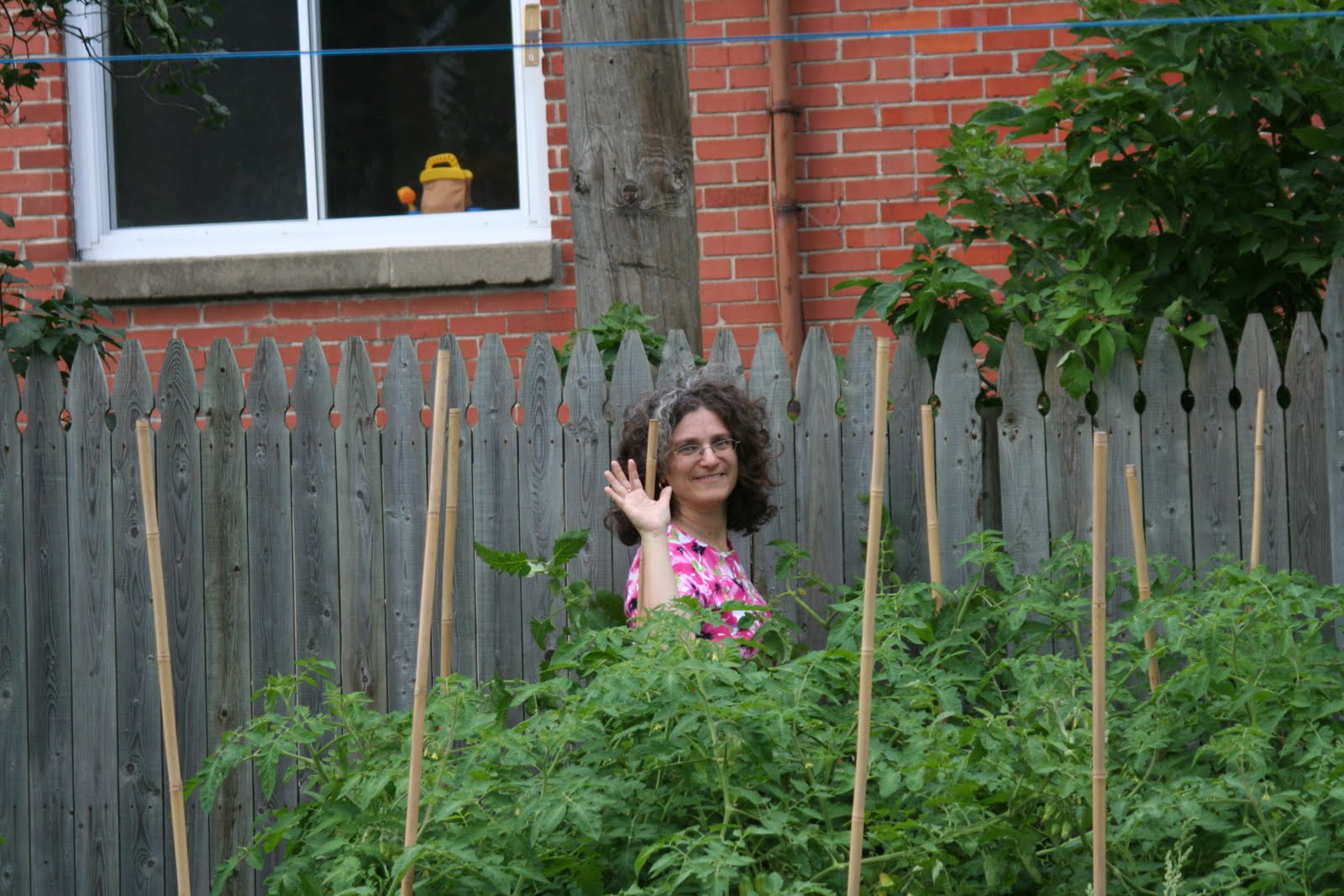
I had hoped that Naomi would have a chance to appear somewhere in my blog. She was the friend who helped me on the day I had to dig up my garden at my old apartment. She had planned to be my assistant with the garden this summer, and helped out back in May with the big planting. There are patches of violets on the side of my house which she lovingly planted while Josh and I were disagreeing over where to plant what in the vegetable garden. She did not end up spending as much time in the garden over the rest of the summer, however. Unfortunately, she lost her oldest, dearest friend after a terrible struggle with cancer. Clearly, her energies were needed elsewhere.
This week, Josh started working on a job site out of town. Suddenly I have become a single parent, at least from Sunday to Thursday. I scrambled to clear my agenda of all unessential activities because my back up help (parents, brother) happened to be on vacation this week. I had one commitment which I could not postpone this evening, and needed help. Although individually, each of my kids are pretty good at fending for themselves, when left together unsupervised, pandemonium ensues. Enter Naomi, who agreed to a fun evening of homework supervision, pizza and refereeing.
When I asked her to help out, I had not checked the weather reports for the week. Once I did, I discovered that the temperatures would be dropping down to zero and below as of tonight. I have diligently been picking any tomato or pepper that have the slightest hint of colour to allow to ripen indoors, but as it was supposed to be sunny, I let the green ones keep going just in case they would catch enough sun to start to ripen. Some did, so I feel justified in my choice. I kept hoping for a sudden turn in the weather and a delay of the frost. This morning, I checked the weather and sure enough, nothing had changed. Today was the day to harvest or lose everything. I called ChloƩ, my mother-in-law, who confirmed the worst.
I had ten minutes between breakfast and when we had to leave, and Orianne came outside with me to do a quick harvest of what we could. We filled a couple of bowls with peppers. On one plant, the peppers were so tightly attached to the plant that the whole plant lifted out of the ground. I ran to the shed, grabbed a big pot, plunked the plant in and pulled out four more for good measure. "Let's go!" I said to Orianne, dropping the bowls of peppers on the counter and the pepper plants under my grow light in the basement with the other potted peppers and the baby columbines, and hustling the kids off to school.
Zara had an interview for a high school mid morning today (she did well, by the way). On our way back to school, we stopped at home for her to change back to her school clothes, and decided to take a harvest break. Zara happily helped me for another twenty minutes to harvest peppers, and we barely got half of them. I wrote a detailed note for Naomi, asking her to have the kids work with her to harvest the rest of the tomatoes and peppers, and to cover the remaining unripe squashes with a bed of hay which hopefully will protect them from the cold for long enough for them to ripen.
I called home at 5 o'clock, just before my meeting started. The kids had forgotten the plan, Naomi had not seen the note. She looked for it and read it while I was on the phone. Poor Naomi had not anticipated outdoor activities (it was cold) and was out in the garden with no jacket for an hour. The girls worked hard. When I got home, the dining room was full of bowls, baskets, colanders. Hundreds of green tomatoes and green peppers and green hot peppers. I am anticipating hot sauce, fried green tomatoes, green tomato chutney, pickled green tomatoes. Naomi finally had her moment of glory in my garden story. She saved the tomatoes and peppers.
Monday, 24 October 2011
Cider House
I will take a bit of an aside from stories about our garden to tell you about some extracurricular gardening activities Josh has been up to lately.
Recently, a friend of ours moved and offered Josh some items he was no longer using. Josh lives for these moments. Among other things, he scored six demijohns . For those not initiated into the world of home-brewing, demijohns (or carboys) are large glass containers used for winemaking or brewing other forms of alcohol. Josh has some experience from before we had children (b.c.)with making apple cider and brewing up other fruit based alcohol beverages. He decided, as it is apple season, to test out his new equipment and brew up some cider.
He bought some Melba apples and yeast, peeled the apples and pureed them in our Moulinex, then set up some cider to brew.
Those of you who know Josh know that he does not believe in doing anything on a small scale, especially when he is having fun. We have been living on a tight budget these days, which Josh takes as a special challenge. As our garden's output has not been enough to significantly reduce our grocery bills, and our apple tree is too young to produce any fruit, Josh got creative in finding apples for free to expand his production capacity. He posted a request on Facebook to anyone who has an apple or pear tree, offering to remove any surplus fruit from their hands. Within days, Josh was filling our dining room with bags and boxes of apples and pears. It is amazing how many people we know who have an elderly neighbour who no longer can manage their tree or have given up a lifetime hobby of stewing vats of compote. The original two demijohns mysteriously reproduced themselves (I am not sure where the next two came from). A succession of juicers were borrowed off friends. Soon pear cider, apple-pear mix, and apple raspberry cider were bubbling away side by side everywhere you turned.
Josh put a second appeal on Facebook for empty flip-top Grolsch bottles, the kind that can be reused indefinitely with the built-in top. He hauled out our own collection, including two extra large ones which he has held onto for years because he liked them and was sure they would come in handy one day. He rescued them from my countless attempts at culling them, and is now gloating at me. Yes you told me you would eventually use them!
Sometime in mid-September, Josh cracked open the first bottle to taste. It was sour, and barely bubbling. I was rather unimpressed and gently suggested he work on perfecting the taste before going into mass production. He stoically ignored my critique and waited another week before giving me my second taste. I learned that I had been too hasty in my judgement, the first taster was far from ready. In a single week, the taste had filled out and sweetened, and developed a crisp, bubbly texture. I approved.
In the past month we have entertained extensively over Rosh Hashana and Succoth. We have served Josh's cider to members of both our families, out of town guests, friends and colleagues, and it had proved so popular that some of them agreed to pre-purchase some of his cider to furnish him the money to buy a second hand wine press (found on Kijiji, along with yet two more demijohns). Al, an old friend of Josh's, hooked Josh up with the owners of an abandoned orchard brimming with organically grown apples, who have allowed them to harvest everything for ten dollars a warehouse crate full. The two of them spent an entire day last week apple picking. Al agreed to house the press and the apples (no room here, too many tomatoes!) So far Al has pureed around 60 litres of apples, and he is just getting started.
In the meantime, on my home front, the sun came out finally for a few hours today after days of rain. I did a small harvest of tomatoes which had just a hint of orange, hoping they will ripen indoors. I am taking my chances, for once the frost hits my garden, all is done. I have no time to put blankets on the tomatoes at night like my friends up north do in late August, and I am not yet set up to do a four season garden (maybe next year). I also picked some green and hot peppers, and a couple of portions of broccoli for dinner tomorrow. We ate a lentil-vegetable soup for dinner made from potatoes, tomatoes, squash and tiny sweet potatoes from my garden as well as turnips (rutabagas?)from my mother-in-law. My kids ate tons of it. I have another batch of tomatoes drying in the oven tonight.
Yesterday, we took down our succah. Living in a Jewish neighbourhood, we have a special drop off site for the schach, the branches used on the roof of the succah. I uprooted some of the dead sunflower plants and tossed them in with my trunkful of cedar branches (the car smelled really nice). The leaves have finally turned from gold to orange and red. Happy fall to everyone!
Saturday, 22 October 2011
Garden Therapy and Harvest festivals
It is late October. I had expected to be wrapping up my garden by now, pulling up the dead remnants of the plants, raking out last year's compost and bedding it all down in a layer of hay. Surprisingly, we are not there yet.
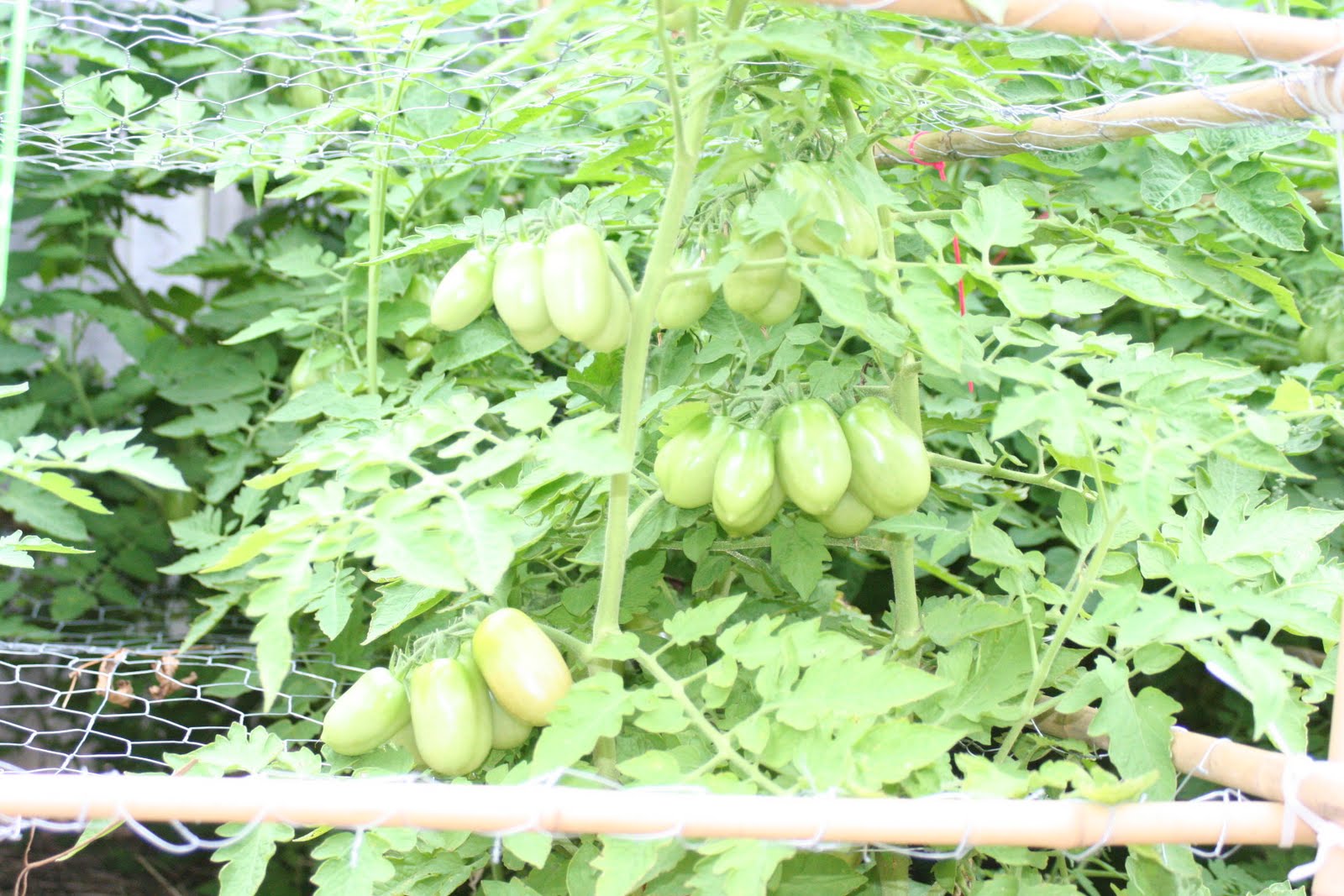
My tomatoes are still blooming. So are my squashes. Both are full of green fruits and I am still harvesting. I peeked under the potatoes and sweet potatoes which I planted far too late to expect much and got a bowlful of baby potatoes. The peppers are covered in fruit, with some reddening or turning yellow daily. The four plants that are in pots have been moved under a grow light in my basement, and are ripening much faster. My nasturtiums finally started to bloom two days ago! My morning glories are still flowering. The new patch of lamium I planted in July is starting to flower. The strange mint hybrid with the red trumpet flowers have decided to bloom again too. For those of my readers who are not in Montreal, it has been cold and rainy all week. We are wearing winter coats, but we still have not had a frost so my garden is convinced that there is still hope. I am picking every tomato with the slightest hint of a blush because I am sure nothing will vine ripen before the frost hits. The tomatoes are ripening nicely inside. I am bringing in the green ones that fall down. We have been discussing pickled green tomatoes, green tomato chutney, fried green tomatoes, but Josh decided to throw them in with the assortment of ripe peppers to make the hottest litre of hot pepper sauce I have ever tasted. My mouth felt like the finale in a fireworks show, with each in the series of explosions having a different size and colour.
Given that this was not the weekend of garden wrap up, I will be continuing my blog for a bit longer this season. I have not blogged for a while because I have been in the midst of Jewish holidays. For the past four weeks, I have been trying to balance harvesting with my day job, the kids back at school, violin lessons, gymnastics, visiting open houses for both high school and CEGEP (college), and Jewish holidays. I even succeeded in recruiting my children to help harvest tomatoes ten minutes before lighting the candles for Succoth, the Jewish harvest festival. I have been trying to avoid all gardening activities on the Holy days, leading to mad scrambles to get it all done.
For Succoth, it is the custom to build a temporary shed (a succah or tabarnacle in archaic English) outdoors with branches on top to allow you to see the stars. It is a reminder of the harvest huts of the ancient world, and the shelters in which we slept during the forty years we wandered from Egypt through the desert. We eat in the succah, and in nicer climates than Montreal, people sleep in the succah too. The weather was cooperative and allowed us to entertain two dozen friends and family members in our succah last week. To be in our hut surrounded by our garden, eating our own produce was really special and meaningful.
Among our guests were my in-laws, who brought a basket of goodies from their garden. They had great success with rapini, and brought us a huge mass of giant green leaves. Josh and I decided we needed to do a lot more research on why ours failed utterly, as we enjoyed a wonderful dinner of pasta and fresh rapini. They also brought us garlic, onions, carrots, turnips, cabbage and spaghetti squash (double the size of ours). They give me a taste of what is yet to come from my own backyard down the road.
As I was nearing the end of the holiday cycle, my garden was getting somewhat neglected. Three of my tomato plants did not fit in our well organized cage system, and although we had staked them with bamboo poles early in the summer, we did not maintain them and by last week, the branches with fruit were sprawling on the ground in a buffet for the last remaining resilient slugs. Also, many of the branches of the other sixteen plants, particularly those with no tomatoes on them, were drying up and dying. With the rain, the dead leaves were sticking to the green tomatoes and threatening to rot them. So I decided to tie up the drooping branches and snip the dead ones, tidy things up a bit. The one day this week there was sun, I left my children to their own devices and took to the garden with a scissors and some string. I knew that my children would avoid me like the plague knowing that if they even showed their faces in the back yard, they risked being co-opted to help in the task. I had the quietest couple of hours you could imagine. At some point, my friend Mike dropped by. He is currently underemployed and none too happy about it, and found me to be a very receptive if somewhat invisible ear to his troubles. He said that he could locate my position more from the rustling of the bushes than my occasional comments. I was a totally captive audience. I realized that garden therapy works in many ways. This week, I gardened while he got therapy.
Upon finishing my almost obsessive trimming of the tomato jungle, I can now see all the green tomatoes from my window in the house. I no longer need to dive through branches and lift sections to find hidden treasures. There are still hundreds more which I hope will start to ripen before the temperature hits freezing later this week (according to environment Canada weather). Especially as this late season crop are big, hearty tomatoes with few slugs to bother them. We are still pureeing twice a week and freezing the puree for our first annual Italian style big tomato sauce cook-off.
Sunday, 9 October 2011
Raising children, not flowers
Many years ago when Josh and I were looking to rent our first apartment together, we met with our future landlord for an interview to see if we would be a good match. We were hoping to rent an upper duplex from an older gentleman named August and his wife, Helmi. In our meeting, Josh was his usual extroverted self, and when August asked if we planned on having any pets, Josh responded that as I am allergic to fur, he was hoping to have an assortment of non-furred creatures including birds, reptiles, spiders, maybe some exotic insects. Then August asked us if we were married. I was not sure how to respond to this question, as August was in his seventies, and I was not sure he would be pleased to rent his apartment to a couple living in sin. Nervously I replied that we were not but we did plan to get married in the not too distant future. He visibly relaxed and said that he was pleased we were not married, as he really did not like having children upstairs, as they made a lot of noise. Josh inquired as to whether we would have permission to have a small garden space, to which August agreed, being an avid gardener himself. We left with a lease with a full page insert detailing that we were not permitted to breed reptiles, insects or any other unusual creatures. We did respect this clause and Josh only began his experiments with spider and mantis breeding in a subsequent apartment once he had learned to not mention these activities to prospective landlords.
We never did find the time to garden while we lived on Ronald drive. Shortly after moving in, we started planning our wedding, then we got married, then I did my master's degree. At the same time, Josh attempted his first (failed) catering business in partnership with his parents. We then started our family. Isaac was born four years after we moved in. August's early warning about not wanted children in the house became an ongoing issue. First it was my rocking chair that went bump in the night. Isaac never slept and that rocker and the swing were the only means by which I got any sleep that first year. Unfortunately, it woke August up. He tried to help us by improving the soundproofing, tightening the screws on the rocker, but it was an ongoing irritant for him. Before long, Isaac started walking. We were amazed at how loud were the noises from his frequent bumps when heard from below. A wise friend of mine at the time suggested I tell August that I am raising children, not flowers, and they will make noise.
Though this was true, we had developed a close friendship and deep respect for August, especially after the death of his wife. I did not want to cause this man so much stress in his own home. When I became pregnant with Zara, my second child, we decided that it would be better for everyone for us to move.
During those three years that we lived in that duplex with Isaac, we tried to teach him to walk quietly, not make loud noises, and generally be respectful of our older downstairs neighbours. Try as we might, it did not work. Isaac was by nature a loud child, he still is, and all our attempts of changing this did not seem to have any effect. I learned from him and my subsequent two children that they are who they are. As a parent you can steer them, provide opportunities for them to express their talents, or screw them up, but they show up with their own style, personalities, talents, energy levels and interests.
What does this have to do with gardening? I have found it fascinating to see how our gardening experience has been filtered through the different interests, personalities and talents of the members of the family.
I won't talk about myself in this respect, I think that it is a theme that runs throughout this blog. My garden is my opportunity for meditation, for writing, for having a little piece of the country in my own backyard. And for finally being able to raise flowers as well as children.
For Josh, the garden is yet another opportunity to problem-solve and play. He can obsessively emerge himself in the details of putting theories into practice. He can build cool stuff. Find the right matrix to grow his favorite mushrooms. Arbor sculpture his own living furniture. Graft different varieties of apple onto the same tree. He also can grow and cook ingredients which he cannot easily find in the store: the best sauce tomatoes, the biggest basil bushes, exotic melons, Japanese cucumbers. It is his space to do cool stuff. It also eases some of his paranoia, knowing that when civilization collapses, he will already be on his way to self-sufficiency. He even backed down on his anti-sunflower tirades when he acknowledged that we should learn how to grow our own oil producing plants, and they are easier to grow than olive trees in this climate.
Isaac has had almost no interest whatsoever in the garden itself. He is far more interested in the end product than participating in the production thereof. He is fifteen and going through a huge growth spurt, and happy to eat anything (and everything) in the fridge and pantry. He is fascinated with photography and filmmaking, though, and early on this summer I asked him if he could be the official photographer of our gardening experience. Some of the photos on this blog and on facebook are his work. He lost interest quickly and went back to playing on his computer.
Zara showed some initial enthusiasm, and joined Josh on a shopping trip to buy seeds early in spring. Josh and I had spent an evening choosing what we were going to grow, but they came home with all sorts of things which I did not expect. Zara had decided she wanted to grow peppers. She bought six different varieties of pepper, including sweet, mild and hot ones. Once I started planting the seeds, she was very resistant to the idea of planting any of "her" seeds. With my insistence, she helped out for a bit, then decided that I was much better at it than she was and she would rather go out and play with her friends. That was the last time she was involved with her peppers. Although I have planted, transplanted (up to three times), weeded, fertilized, watered and harvested them, they are still "her" peppers. Although if you ask our bird, he would probably insist that they were his personal treat. Throughout the summer, every time I look at a garden and point out the flowers I like, she replies that "flowers don't turn me on." I have learned to not talk flowers with her.
My youngest, Orianne, is the most interested in the garden. She spent a couple of weeks being my daily harvester of strawberries. She has been my partner in crime for my seed pilfering activities. She has spent hours checking out gardens with me up and down the streets and alleyways of the neighbourhood. Orianne has attempted to transplant a mint garden into the crook of the tree growing outside her bedroom window. She takes her friends around to show them the garden and help her pick beans and tomatoes. She is fascinated by the bees, ladybugs, spiders and mantises, and will listen to Josh explain their reproductive habits and how to identify if the females are pregnant. Yesterday, Orianne spooked a pregnant female mantis and it gave her its full display with wings open.
Today, I separated the seeds from the sunflower heads. Once I pulled off the remaining bits of the corolla (I think that is what you call the fluffy yellow bits on top) to reveal the seeds below, I showed it to Orianne. She was amazed. She wanted to paint it. We took some photos (I will post once downloaded) so that she can study at her leisure as I eat the seeds over the next few months.
I had hoped that all of my children would share my passion and take on a part of the garden project. But they are who they are. I can only show them what I like to do, and hope something may catch on. Only time will tell.
Thursday, 6 October 2011
Off with their heads!
Josh was just looking over my shoulder at my dashboard for my blog and noticed that I have followers.
"You have followers? That's not as good as henchmen," says the man who has his user language on Facebook set to Pirate English. I thought that would be a good segue into my theme tonight, which involves decapitation. Of sunflowers, mind you. No blood.
Today we harvested the first of the sunflowers. I have been irrigating them for weeks with coyote piss to dissuade the squirrels from stealing them before they were ripe. I have even run after some bolder squirrels yelling in my determination to preserve some of the flowers until the end of the season. Josh, the pirate, outdid me and sprayed some of the squirrels directly while running after them and swearing. Despite all efforts, as many as one-third of the giant sunflowers were headless shortly after opening.
I have not grown sunflowers since I was in elementary school. At the time, I had a pet hamster and a few plants in my bedroom. I kept the hamster food next to my plants on my desk, and being careless, I occasionally spilled some of the food, which was a collection of seeds. I often had a blade of grass or two pop up in the plant pots, and once a couple of sunflower seeds sprouted. My mom let me transplant them into the garden, and somehow they grew to fruit without squirrel banditry. The squirrels of my childhood neighbourhood were insatiable for tulips, but my sunflowers were unmolested. I don't recall much how big they were, or how pretty the flowers, but I remember being blown away by the intensity of the flavour of the seeds. Eaten raw, they made the packaged roasted seeds I loved taste like cardboard in comparison. I could never imagine growing my own garden devoid of this delicacy.
You may recall from an earlier post that sunflowers were a big bone of contention earlier this summer. In fact, the only fight Josh and I had in the longest time was over sunflowers. Being clueless when we planted seeds, I planted a lot of sunflowers, some small ones and some giant ones, expecting a low survival rate. It turns out sunflowers are extremely hardy. The one I tossed in anger (during the famous argument) towards the compost bin snapped, and the leaf touching the earth acted like a root and sustained the plant to continue growing crookedly. Josh was warned by his mother that sunflowers will interfere with the growth of the plants around them, and did not want them in the sunny spots of the vegetable garden. I did end up giving away plenty of them to anyone who would take them, but had a few in the vegetables and more along the sidewalk in front.
The small sunflowers were quite a delight. They were multicoloured, in shades of red-orange-yellow, and produced as many as six flowers per stalk. The same plant would have flowers of different colour combinations. They were small, maybe three inches across the entire flower, petals included. In the morning, they were all facing the east. When I came home from work they had all turned to face west (cool trick!) and on cloudy days, the flowers faced every which way in a confused manner. They have personality. And they are sunny and fun. They are the only plant in my garden that I felt compelled to greet and chat with. It sounds odd, but I wished them good morning and greeted them when I came home. They seemed to be smiling at me. They were how I fantasized my children could be. I miss them. They bloomed early in the season, and produced tiny miniature sunflower seeds which were not worth separating and roasting. Our parrotlet, however, is also a miniature and finds the seeds the perfect size. We have frozen the mini-sunflower heads and take them out for treats (birdy num-nums!).
I have been holding out for the big ones. I was skeptical that we would have success. The flowers I planted in the vegetable garden (four) were decapitated too easily. They were planted along the side of the fence which has large trees adjacent at several points. It is in fact a squirrel highway and my flowers were a truck stop along the way. Those four were the largest and strongest of the plants. They grew in the richly fertilized beds and looked all the better for it. The ones I planted in the front had half the amount of sunlight, were planted in solid clay in close proximity to a spruce tree. They looked spindly and needed to be propped up. I had not prepared their beds because I had planned to put them in the back. Josh compromised and let me have space for four only and I had to find any spot to throw them in the ground. It turns out that the spindly ones put all their strength into producing massive heads. At least the ones which survived did. I lost a number of them, and the squirrels helped themselves to a few of the heads early on before they really developed. Once I got more aggressive with marking my territory, I was able to sustain 8 to 10 of them to maturity.
Based on my past experience with corn, I have been checking the flowers daily for a month to see if the seeds were ready to harvest them in the nick of time. It has been raining all week, so I was concerned that the urine would be washed out. The squirrels have been washed out too, so all was well.
This morning, I picked a seed and lo and behold, it was hardened and had grey stripes upon its white shell! I opened it and put it to my lips. Hallelujah!! I had not tasted such intense sunfloweriness for decades! The crisp juiciness of the fruit, the fullness of the flavour! I ran back into the house and called Josh.
"Harvest the sunflowers today! They are ready!"
As I walked to the metro, rode the train and the bus, sat in my office working on a budget report, I cou
ld still taste the sweetness in my mouth for hours after eating one single seed. Tonight we feast!
Upon arriving home, half of the sunflowers are headless. As I write this, Dreydle the parrotlet is sampling his first of the giant sunflower seeds. He is quiet, contemplative, with a contented look on his little face. Seems I will have some competition.
Monday, 26 September 2011
A Berry Picking Primer
When I was a kid I spent a lot of time during the summers picking berries. My parents have a house on a mountain called Blue Hills which was named for the multitudes of blueberries that grew there. We took day trips up the slopes of the ski runs at Mont Avila because there were even more blueberries there. We picked strawberries, raspberries, blackberries and of course blue berries which we learned to recognize by the little crowns. The other berries that were blue were poison, or so my brother told me and I was never brave enough to try for myself. Berry picking was a great way to keep us busy. We would get lost in the bush for hours, spurred on by the promise of pies if we brought back enough fruit. It was also a superb way of getting us to be quiet on long walks, as my mother had us convinced that if we were quiet enough we could hear the strawberries growing. Eventually we wised up, but not until my mother had got a lot of quiet mileage out of it. Somehow it never worked on my kids.
The best part was that I was the absolute best berry picker of all my friends and brothers. This was in part due to my being a ridiculously picky eater who could not stand eating berries. I just picked them. Because I was not spending half my time eating my stock, I picked a lot more. And because I did not eat half my stock, I came home with a lot of berries. I also had more time and patience to figure out how to find the best and the ripest berries, as well as the spots where there were the most berries in the bush. It also helps that I am short, significantly shorter than both my brothers, and therefore much better positioned to find the good berries which are only visible from under the bush.
I have not spent much time over the past few years contemplating berry picking. I still engage in it when visiting friends and family in the country, and of course in my strawberry patch which up to this year has been the only berry patch in my daily life. The past few weeks, however, now that I am spending up to two hours per week harvesting tomatoes I have been thinking about it quite a bit.
You may be wondering why I am thinking about berries while picking tomatoes. Tomatoes are, technically, a fruit. In fact, to quote my rabbi, the difference between wisdom and knowledge can be defined as follows: it takes knowledge to know that a tomato is a fruit, but wisdom to know that it should not be added to a fruit salad. Not only is a tomato a fruit, but it has the same growth pattern as berries. The best and the ripest fruit are inevitably low and deep in the bush. They are also inevitably surrounded by biting insects. I have discovered this summer that the bigger the berry, the bigger the biting insect. Strawberries are swarming with some kind of noseums that leave tiny itchy bites. My tomatoes are swarming with large ravenous mosquitoes that always bite my upper arms just as I am reaching far into the most unreachable depths of the tomato jungle. I have no idea what the official definition of a berry is, but if it is a fruit that grows on a bush near the ground, it seems to me that the same principles apply.
I also realized that I am still better at finding and picking the good ones than anyone else in my family. I send out Josh or one of the kids to check for any ripe tomatoes and after they come out empty handed, I go out and find 25 ready to pick. So I decided to share my methodology.
The author of the book The Fruit Hunters, Adam Gollner, describes how humans are one of the rare species that can visually differentiate between green and red, a trait which is very beneficial when searching for ripe red fruits in a green jungle. He even suggests that stop for red and go on green relates to an instinct to keep going through the green leaves until you spot the red fruit and stop to eat. Although this does not explain our tastes for kiwis, bananas, green grapes and avocados, it is an interesting theory which I contemplated as I hunted in my tomato patch for the slightest hint of red. The theory is appealing, although I have no idea where he got it from. So the first key to berry picking is to duck low and look for red (or blue, or black as the case may be).
The second part of the technique is to lift up the branches and look underneath. The good stuff likes to hide in the leaves. Also, no matter how frequently you pick, there are always a few that stay hidden in some corner and eventually you find them perfectly ripe and ready to go just when you thought all the good ones were gone.
That is it. Go low, look for red, and lift the branches. It takes time and practice. It takes focus, concentration, and a meditative obsession which is why I love to clear my head after a long day of work and hide from my children under the shade of a jungle bush, and feel completely primitive. I have picked over one hundred tomatoes in the past three days. It really works.
Sunday, 18 September 2011
Seeds
We have a friend who has an incredible green thumb. I remember twenty years ago, Claude walked into my apartment, looked at my plants and explained to me that what I thought were fruit flies were something called fungus gnats. He also taught me how to get rid of them and save my plants from death by using diatomaceous earth. For those of you who are not acquainted with this wondrous stuff, it is a powder made of fossilized plankton, which is harmless to mammals but lethal to insects, as the sharp, jagged edges of the dust gets into their exoskeletons and tears them apart. It is great for getting rid of cockroaches, for example, or pests in house plants. Though non-toxic, it is too effective a pesticide to use in the garden, where it would destroy bees and other beneficial insects along with pests.
Claude has since channeled his love of growing plants into a career as an agronomist. He is the guy who farmers and industrial growers consult to solve problems. He does not do a lot of garden consultations for hobbyists like us, but in exchange for a home cooked meal and an afternoon of hanging out with our family, we got some free and valuable advice.
I wanted to know why my lettuce was too small, how to make my broccoli flowers grow big and dense, what plants should grow together and which shouldn't, and how do we decide where to rotate plants from year to year to prevent depletion of the soil. Claude looked at my tomatoes and announced that we had a bacterial infection. It was obvious to his practiced eye when he saw dark spots on the tomatoes, and a lot of the lower leaves were getting yellow. I just thought it was because it was fall. And there had not been spots on the tomatoes I had picked prior to that day. Lo and behold, the next ones starting to ripen had dark speckles on them. Claude told us that this particular bacteria were airborne, and by using a sprinkler to water our plants, we dropped the bacteria right onto them. Also, the wet leaves helped it to spread. He highly recommended watering our plants at ground level and not wetting the leaves. He also told us that once the bacteria was on the plants, it would be on the seeds as well, and would appear on the next generation of plants. His recommendation was to dip all seeds in hydrogen peroxide before planting them. In answer to my specific questions, he suggested that we have a soil analysis done next spring. It costs $30 and can provide us with very concrete recommendations as to how to improve our garden.
Claude's recommendation about the hydrogen peroxide was probably the most timely advice he could have given us, because right now, my life has become focused on seeds. I am saving, drying, packing and labeling all kinds of seeds for next year. Of course, some come from my own garden such as the cucumbers. Others are from things we would like to grow, such as that great Korean melon we bought at the local oriental grocery store.
I have been walking and biking around my neighbourhood on seed missions. I took my youngest daughter Orianne, who has recently mastered her bicycle, on a bike tour of the alleyways of our neighbourhood. The alleys are great because you have a view of everyone's backyard and gardens, and inevitably there are flowers growing against the fence and dropping their seeds on the pavement. What a loss! That is where I come in, rescuing all kinds of interesting cultivars at the limits of their yards. Orianne, while helping me pick dried seeds from four or five different varieties of pink morning glories, asked me if I was stealing. I told her that if I walked onto someone's lawn and dug plants up from their garden without asking, that would be stealing. Seeds are a different category, especially if they are growing over the sidewalk or on the other side of the fence from their garden of origin. I am careful never to walk onto someone's property, I only harvest what sticks out onto public grounds. Some of the beautiful dark pink cosmos I raided for seeds were growing on a square in the middle of the sidewalk.
We went away this weekend, and spent time with another friend who is a superb gardener. We had visited Alex a few years back when he was working on his PhD in philosophy, his thesis describing his experience of being self sufficient, living a minimalist life. He had built his home from recycled materials, provided his own energy using a combination of solar power and a windmill, had the first composting toilet I had ever seen, and an unbelievable vegetable garden boasting the largest imaginable produce: huge lettuces, pumpkins, and squashes. He has subsequently graduated, married and moved into a charming but more conventional house. He has been there for a year or so, and the vegetable garden is just getting started. Alex is particularly interested in heritage plants and unusual cultivars. He is growing, among other things, tomatoes which are green when ripe, some Kong sunflowers which are huge and produce tasty, purple shelled seeds. I came home today with some sweet red pepper seeds, some Kong seeds, some (highly toxic) castor beans (I had never seen castor plants before and fell in love). I also have finally obtained a clump of the elusive red day lilies I have been seeking. I hope they are red. They are no longer blooming and Elyse, Alex's wife, was pretty sure those were the red ones. I also came home with a clump of lilies with lovely small purple flowers, and a few wild gentians which I am trying out on the side of the house.
I am still trying to guard the few giant striped sunflower heads remaining in my garden. The squirrels are bold and the heavy flowers keep drooping down into their range. I have decided not to grow them along the fence next year. Despite my frequent spraying with coyote piss (which is running low), the little beasts keep running along the fence and whittle away at the edges of my last remaining flower in the back yard. I call my technique "pissing them off" but it is a constant effort. I have tied all the flowers in the front lawn to stakes to support them and dowsed their stems in piss. I may yet have sunflower seeds this fall.
One last update on the slugs. Things improved for a few weeks, but we had some rain and the slugs seemed to be coming out in numbers again. I have spread Slug-b-gone everywhere again, and today I did not see any when I harvested my tomatoes but there is still evidence of their appetite. Next year I will start earlier.
Subscribe to:
Posts (Atom)