Monday, 8 July 2013

Bugged out

This year we have had a lot of rain, and cloudy days. It has been alternatingly very hot and muggy and cool, and unlike most summers we have (fortunately for me) not had a long hot spell. I say fortunately because I cannot take the heat, I am a fan of cold weather and love fall and winter. The garden, on the other hand, probably would be happier with a bit less rain and a bit more heat for this time of year. Particularly the tropical plants like the tomatoes and peppers which are much smaller than they have been the past couple of summers.

It has been a great year for bugs. So far, with help of 4 entire bags of Slug-B-Gone, I have kept the snail and slug population down to a trickle. This is miraculous because it is ideal weather for those pesky gastropods, and with the addition of loads of hay onto my beds, I have created the perfect condition for an epidemic. I suppose that I have the best conditions to test the effectiveness of the product and it is holding out. I have not put any beer out at all!


Josh went overboard on mantises this year, and put out nine ooths of Chinese mantises in the spring. I think some of them went onto neighbour’s gardens (my husband the mantis fairy) but the number of mantises in our yard skyrocketed this year. Josh does a daily census, and has been taking photos. He keeps track of where they are, which are male and female, and will be watching for signs of mating in the late summer. I also have been seeing the odd ladybug (who I faithfully deliver to the closest aphid infested tree), and a number of those soldier beetles.
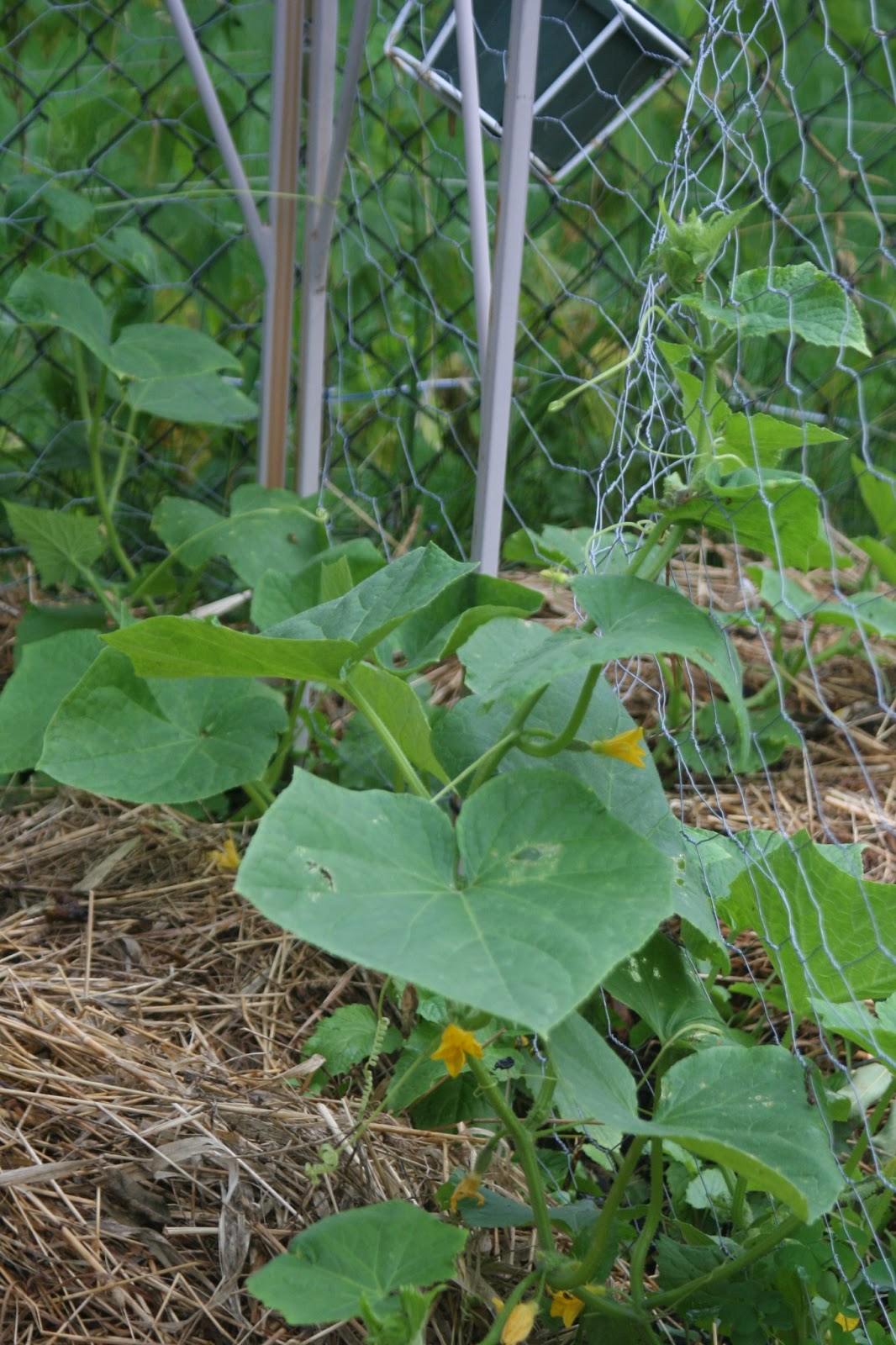
I am not doing well with the aphids. All three of my fruit trees are infested, as are my big patch of orpines. I have been spraying them with diluted dish soap every few days, but now the leaves have turned rust coloured where I sprayed, and are drying up and dying. I also have spotted cucumber beetles and occasionally kill them but more often they fly or scamper off quicker than I can get them. I consulted Claude who recommended diluted soap, and went online to see what other suggestions. I saw neem oil turn up repeatedly for aphids and for cucumber beetles. Also, suggestions for cucumber beetles were deep mulch (straw or hay) around the base of the plant to prevent eggs/grubs getting near the roots, putting tin foil under the plant to reflect light under the leaves where the beetles feed in the shade, onion skins around base, picking off and crushing the beetles. So far the plants are flowering and seem healthy, but my experience last year was that they went from vibrant to dead within a couple of days.  I am checking them every evening now.

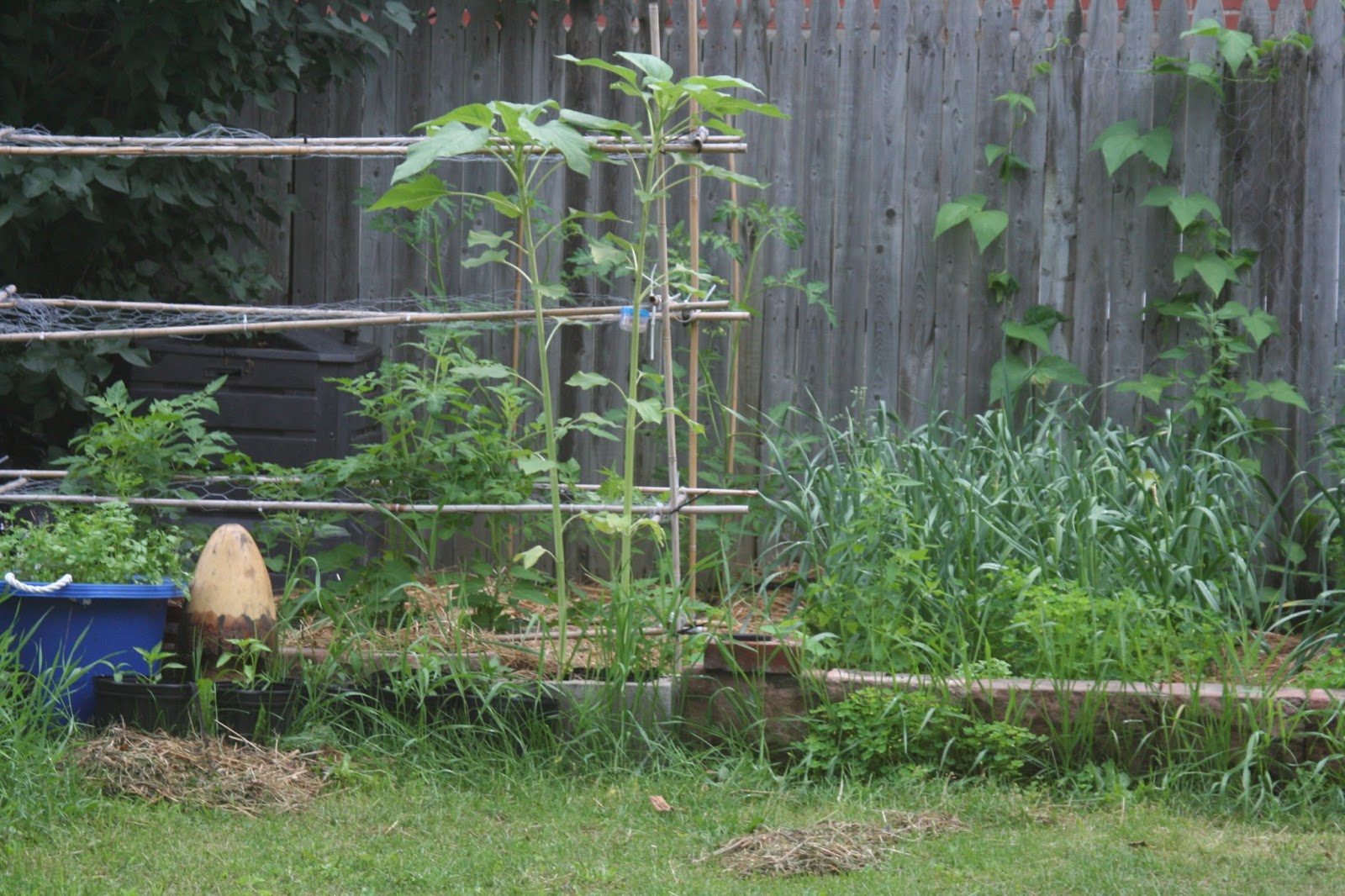
One of the websites I looked at said that aphids attack plants and trees that are weaker and it is important to fertilize them. Josh was trying to get some free composted manure from his parents, but it did not pan out, so I asked him to pick some up after work this week. He came home with bags of cow and sheep manure, and bought a few extra sunflowers just for fun. I noticed that one of the heads of my just-budding sunflowers had been knocked off and eaten already, so decided that I would need to get the coyote pee out ASAP now that I was adding some blooming sunflowers into the mix. I spent three hours after work on Wednesday liberally distributing some seven bags of manure everywhere except for the daylilies and the periwinkle, neither of which need any further encouragement, and then sat down to pour stinky coyote urine into Josh’s homemade dispensers (plastic containers with holes drilled in the sides, filled with cotton pads doused with pee).
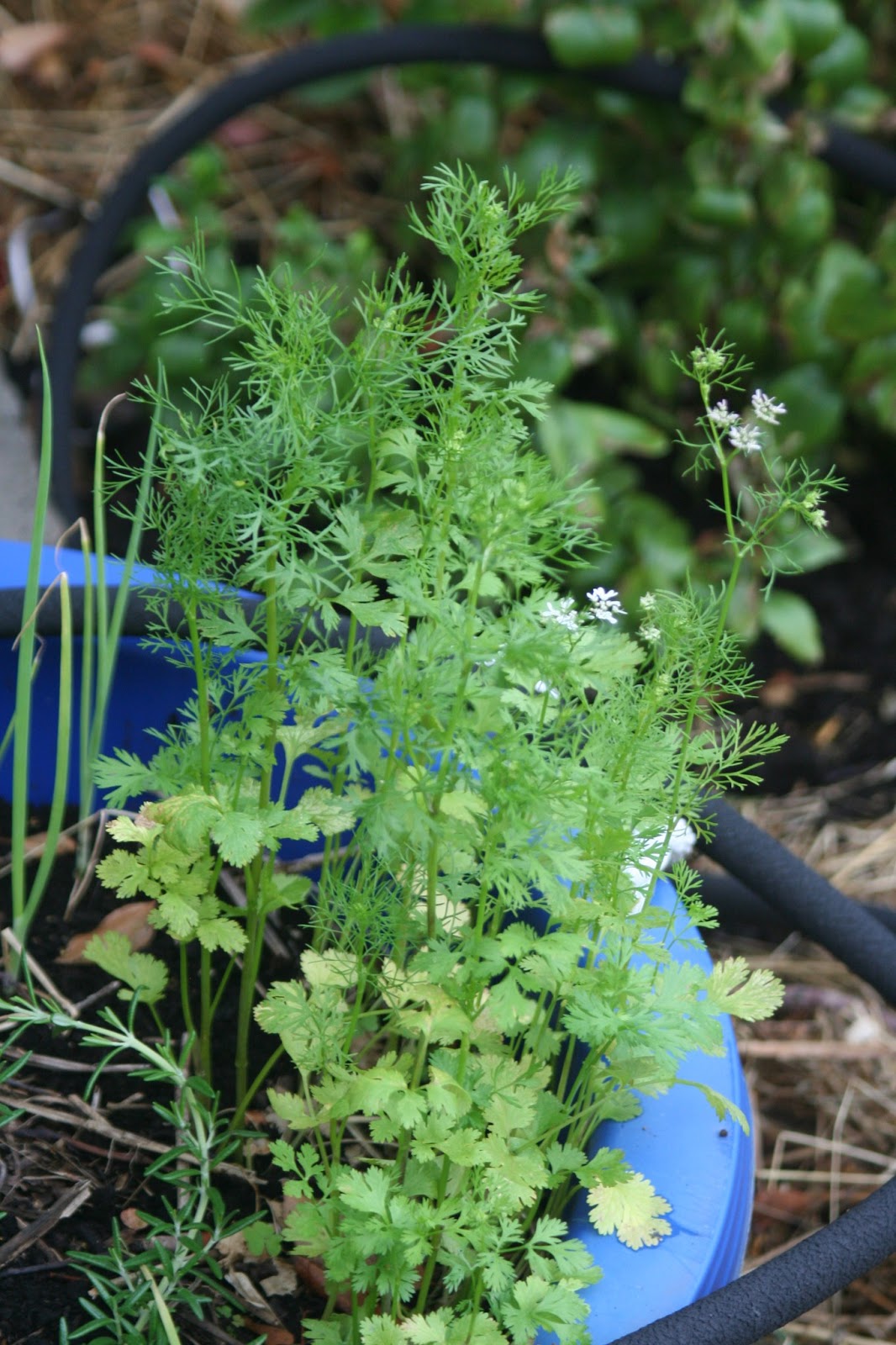
 I put them up all over the garden, especially near to the sunflowers and tomatoes and cucumbers. The containers are clear with coloured tops (pink, red, blue) and look very decorative. Once Josh washed the spilled pee off the front steps, you could not smell the urine anymore.  So far, after 5 days and lots of rain, not one sunflower has been decapitated. Josh suggests reloading them every two weeks.  By the time I finished, I looked, smelled and felt pretty disgusting, so I ended off my evening of garden fun with a soap spray of all the aphid infested plants (and myself whenever possible), and a hot shower.

I was interested in finding some neem oil. Josh suggested health food stores. I called a few local stores  today.  One had neem oil in capsules, obviously for human consumption not to spray on plants. Another suggested I call back later when the owner was in. One could order it for me at $12.99 an ounce.  I took another approach and called a local nursery. The owner, Jack Vincelli, said he did not carry it but I was the second caller in as many days to ask, so he would consider getting some if there was a demand. He asked what it was for. I explained my problem and got a good lesson on what I should be doing.

First of all, I had no idea how my dishsoap should be in my diluted dishsoap, and it turns out that I have been putting in far too much. Mr. Vincelli suggested 1 tablespoon per litre of water, and add a half teaspoon of baking soda as well. I have probably been putting a third of a cup of soap in there, and that may well explain why everything I have sprayed (including an indoor African violet infested with mealybugs) appears to have been dying once I have sprayed them. He also told me that neem oil is great to put on fruit trees in the fall, because it has the effect of sealing any of the bugs that are dormant and smothering them, but would not be of much use this time of year. I told him that if he has neem oil in the fall I will gladly purchase it from him. He suggested that I brush the aphids off the leaves manually, get on a ladder to reach the leaves on top, and then spray the underside of the leaf, which is the most effective combination.  I am feeling more confident already that I may be able to kill the bugs, not the trees. He also recommended hanging my cucumbers rather than having them trail on the ground. I told him I have them trained to climb up, which is the next best thing. I am thinking of trying to hang them up next year.

Last week, I went over to my friend Julie’s duplex to see what interesting things she is doing on her balcony. She lives in a duplex with a large back balcony over the garage entrance. I had fun brainstorming with her about some ideas for climbing plants like morning glories and clematis going up her brick wall and cascading down off the balcony railing. I saw the new incarnation of her wall garden, with flowers and a bit of chive on top.

  
She is having trouble keeping the top half wet enough. She also showed me this hanging bag with a very healthy, vibrant but definitely upside down tomato plant. 

The weather has been kind to my lettuce which is bigger and tastier than it has been in years past. The peas are doing great. If they are snow peas they are ready and but I am leaving some to see if they will fill out. I think I threw out the package they came in so I am not sure, but they taste good as is.  The bee balm is in full flower and finally very happy where I put it. I did transplant some of the dwarf pink varieties there too, but so far it is all the big red ones. I am not giving up hope, because surprise, surprise, the white hydrangea bush reappeared and flowered last week after not turning up three years running.


. 

Saturday, 29 June 2013

Trees and bushes

I mention often in my blog that I have a lot of shade in my garden, which poses many challenges for growing lots of beautiful flowers requiring full sun. Even partial sun can be elusive in some spots. This is because my property and my neighbours' as well have wonderful, beautiful trees on them. In fact, the first thing I spotted when I drove down the street on that fateful day when I saw the "for sale" sign on what would soon become my front lawn, was the huge trees on the corner of the block. I had no idea what they were, as my knowledge of tree recognition was at the time limited to maples, poplars, pines, willows, beeches, and birches. I supposed that is not a bad base to start from. Those are the trees I was most exposed to in the Laurentians and growing up in a part of Montreal which once was a swamp, now well drained by lots of willows and poplars. Oh, I also recognized crabapple trees, but when we bought the house, the crab apples were unidentifiable weeds sprouting in the mint and lavender patch in the back. 


The most stunning trees actually do not belong to us, but to our neighbours. They have a magnificent double-trunked ash tree close to the fence between our yards, which defines where I plant what in the garden as it provides shade for half the day on the part of my yard closer to my house. The leaves have a luminescent quality which makes them appear to shimmer. At night, they catch any ambient light and look like they are glowing. Being in the city, there is always light for them to catch. I love to look up, or even lie on the lawn with the leaves glowing and sparkling against the night sky. The downside to the ash is that it has the tendency to drop large branches in storms. So far no one has been hurt, no windows broken, but lots of clean up whenever it rains or snows or if the wind picks up.

They also have a Linden tree which provides Iulia with plenty of herbal tea and drops sticky sap all over our cars in the driveway. It is a very pretty tree, with a classic, balanced ideal tree shape. Up against their house they have a conifer which I believe is a spruce, and which they are planning to cut down later this summer to let a little more light in.

Both of our properties were originally backed by a thick grove of lilacs. Our neighbours removed theirs but we have ours, a patch at the back corner behind the fence and a big grove along the side of the road on back half of the property. The flowers are classical pale purple (lilac, I suppose) which is not my favorite shade. I am partial to the deeper purple colour but will take what I have. Josh has ambitions to do some arbour sculpture with the lilacs eventually, but for now they do a fine job cutting the noise and view of the city beyond and provide me with beautiful flowers and are probably in part responsible for my spring allergies.

We have a couple of spirea bushes that came with the house. For the first couple of years, I trimmed them savagely in early spring and thus inhibited their floral display. The third year I realized my error, and was treated to a brief but glorious display of white starbursts. It turn out that they are bridal wreath spirea, and in bloom they look like white fire works. I now wait until they have had their fun before I trim them back, otherwise they look messy.


I have a patch of Elms in the back corner behind the fence. They are young and scrawny, but alive. Dutch Elm disease appears to have hit a couple of other elms which once adorned the side of the property, one now a stump and the other a dead shadow of the tree that it was.  We also have a big spruce in front, and two boxelders, which are weed trees. They grow fast, die young and tend to split and crash. Josh doesn’t like having them around the house.

We have added a Jersey Mac apple tree, some rose bushes, a purple tulip magnolia tree, and transplanted two crab apple seedlings to a better spot in the back yard.


I also wanted to write a bit about those mysterious beautiful red flowers which my friend Jasmyn gave me. She told me they were in the mint family. A couple of weeks ago, my friend Julie sent me a photo of some herb she bought but lost the tag and could not remember what it was. I sent it to Claude, who identified it as pineapple sage. He described it as being able to grow up to 5 feet tall, and being a favorite of hummingbirds and butterflies. They are perennials in Mexico and Guatemala, but won’t survive our northern winter so are annuals in our climate. They are also called Tangerine sage, latin name salvia elegans.
Pineapple sage, not from my garden


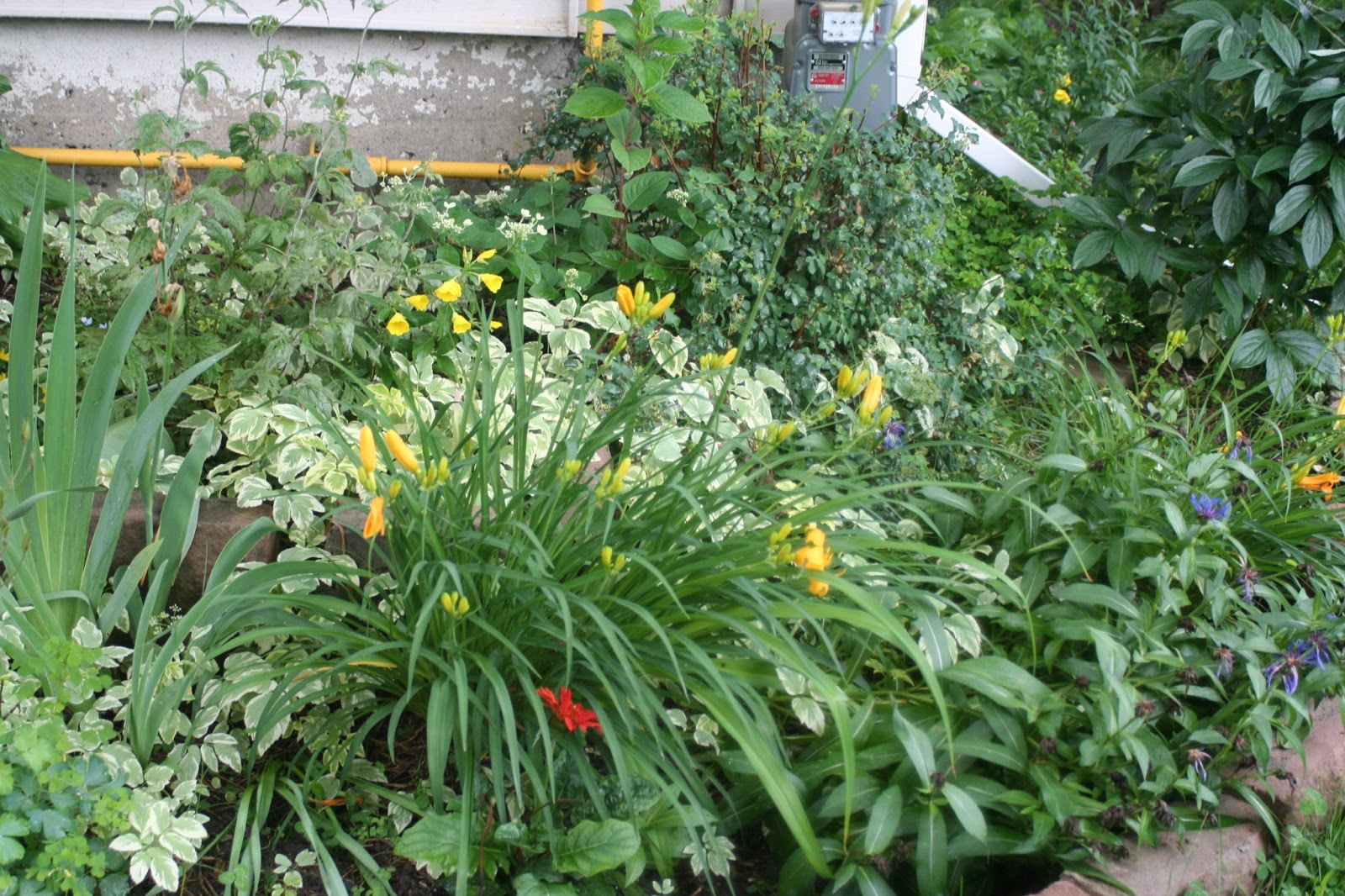
I took some photos of where things are in my garden this week. We have moved from a palette of mostly pink and purple to yellows and oranges as my evening primroses and lilies have burst into flower. I picked up another interesting oriental lily (I really am a sucker for those), and planted a bunch of stargazer and dark purple lily bulbs which were on sale at Walmart. 
 
I did a harvest of lettuce, strawberries, green onions, herbs, garlic scapes and mint for dinner on Friday, and we had salad, pasta in a rosé sauce and roast salmon all flavoured from the garden, followed by fresh mint tea.

Boxelder
Milkweed
Linden
Lilacs


Sunday, 16 June 2013

Making a garden into a landscape

Our new magnolia


Last Sunday, we had a number of events come together which have been a long time coming. Last March, our very beloved parrotlet Dreidle died quite suddenly. As it was still cold and the ground was frozen, we decided to wait until things warmed up to have a small funeral. The decision was taken that he would have his final resting place in one of the tea boxes which he loved to use as a hiding spot, in our garden, and that we would plant a magnolia tree in his honour. Over the past few months, intermittently, Josh was researching where we could buy a purple tulip magnolia tree. He also was doing his research on finding a new parrotlet, as both he and Orianne our youngest daughter, deeply missed having a bird in the house and loved parrotlets. Dreidle's untimely death is likely related to the fact that he was a colour morph, not a naturally occurring colour of parrotlet. Colour morphs are inbred for amazing colours but simultaneously have other health issues seen in inbred animals, various dangerous recessive traits that come out. We were leery about having another colour morph. Josh found an ad on Kijiji from a family who had a 5 year old parrotlet looking for a new home where he could be given more attention. Just as I found a nursery with purple tulip magnolia trees in stock, Josh made the connection with Coco's owners and we picked a date to have a funeral for Dreidle

Creeping thyme

Josh went to pick up the tree, and found some really pretty cascading dark purple petunias, as well as some pineapple mint and rosemary and some other mint-like plant whose name I lost with pretty pale purple flowers (we seem to be in purple mode this year). We invited Naomi, Lisa and Olivier to join us as all three had a special relationship with Dreidle. Olivier brought over some rum which we served in some left-over paper cups from a Chanuka party, which appropriately were decorated with dreidles. The tree was planted on the corner of my garden in front of the driveway, in view of Iulia and Ovidiu's windows as well as ours.

Back in April, we finally redid our ancient windows and leaky doors. The owner of the company who did the job mentioned to Josh that he was redoing the façade of his own house, and Josh asked what he was doing with the stones. The owner offered to give them to us, and back in May dropped them off on the side of our house, where they sat providing a wonderful breeding spot for snails right next to the lilacs until Sunday when Josh and Olivier rolled them to strategic spots in the front garden. Josh and I had intended to use the stones to make borders and walls for the areas of the garden on the edges of the property, until Olivier gave me a talk about rethinking how I plan a garden.

Ollie pointed out to me that in designing a garden one should bear certain principles in mind. One was that straight flat lines were dismal, that lines should not be borders but should be used as means to guide the eye in certain directions. Lines should create patterns that repeat, circles or arcs. Plants should be planted on both sides of a line of stones. Colours should be in bold clusters. He complimented the work I had done on the side of the house, with a wave pattern of tall and short plants (not intentional, really, I had no idea how tall plants would be when I planted them.) He also told me it is not proper feng shui to have a plastic container in the front yard (I removed my planter to the side of the house onto the shelves under the window).

So instead of neatly aligning the stones in a row, we left them in a meandering and broken line with little curves that will hopefully house clusters of lilies next year. I also spent time moving some of the plants that were lost and drowned out from the front to the area beside the driveway and to the front of the house. I moved the bricks which outlined the small garden on the left side of the house so that instead of a flat straight line, they curved outwards. The whole look of the front yard changed. I picked up a few annuals and transplanted some of the creeping thyme to the new curved space I created and Wow! It really looks good.


 I realized that I have moved up a notch in my career as a gardener. I started out putting all my energy into not killing things. I had no idea what needed more light, I trusted the little plastic tickets which promised me astilbes are fine in the shade (I gave up and moved them into the sun), I was not sure what I had planted and what was a weed, and what things looked good together and which plants would get really big or spread and drown out everything around them. I am still moving things around that looked great where I put them three years ago. I am also still learning what is really dead and what is just fooling me. My small, new lavender started to come back this week but the big one looks pretty dead still. I cut it back and I am hoping for some new life. I went on-line and confirmed that Blue bird rose of Sharon bushes are late bloomers and may appear to be dead sticks, just hang in there as they eventually get started again.I never took the time to think of my yard as a landscape, and the same principles that make a landscape painting appealing make a real landscape appealing.
Young robin on tomato cage


Roses
As for other garden news, Julie called me this week to tell me she had a revelation about her “off the wall” garden, that she had no idea what chemicals the flat she was using had been treated with and if there was a risk eating herbs grown in it. She decided not to take chances and transplanted all the herbs from the flat to pots, and replanted with flowers. I will have updates on it later in the summer.
Aphids on crabapple
Orpine with aphids
We also have been having problems with aphids, on the orpine in the backyard, on both crab apples and on the Jersey Mac apple tree. I have been spraying with diluted dish soap every couple of days. As for pests, I noticed an orange beetle on the orpine and decided to identify it as I wanted to know if it was eating my plants before I crushed it as I have been doing to the red beetles eating my lilies. I brought it inside and it flew off my hand the minute I walked in the door. So I went about my errands and later in the day saw it again on the wall near the back door, and called Josh to bring a container. I caught it, and went on-line with Mr. Beetle in a cup next to me for easy consultation. I could not find it on garden pest links, so tried beetles. Turns out well, it is some type of soldier beetle which dines on aphids. I felt very happy I took the time to identify him, and promptly dropped him back on my orpines. I have been seeing a lot of these orange beetles around, which is good. I hope they don't mind dishsoap flavoured aphids. We received our shipment of coyote pee from the p-mart. It has been raining often this week so we did not bother marking our territory. Josh plans to make our own dispensers. I put in a lot of sunflowers, so we will be needing this later in the summer when the flowers come out. 
Mint and horseradish
Garlic galore!

Thursday, 6 June 2013

Off the wall gardening

My friend Julie rents a lower duplex, with a large back balcony and a small garden plot. She tends to do more "kitchen gardening" on her balcony in boxes and pots, but this year she was inspired by something she saw at a restaurant terrace involving a vertical garden built into a wooden palate, with a backing and earth inside, with plants growing through the slats. It was both attractive and practical if you have limited space. She and her kids came over and raided some of my basil and tomatoes that did not make it into the garden. She explained to me on the phone what this thing looks like and invited me over to see. Unfortunately, as per my last post, I have been a bit busy, so she sent me a photo of what it looked like.

This is just after she planted everything so it looks a bit wilted. I plan to look in on what it is doing later this summer and will post some more.

I was intrigued by this idea and did a web search and found this interesting and beautiful site on what people have done with variation on this wall garden idea. It is worth checking out:

http://bluestemnursery.blogspot.ca/2011/01/living-walls-or-vertical-gardens.html